Monday, June 18, 2012

Serendipity

On Saturday I was in Oslo as Aung San Suu Kyi finally got to give her Nobel Prize speach. Please forgive the quality of this story, as I am using editing software on an iPad and have borrowed the wifi at the local library in the very small Norwegian town of Valer. The librarian has been extremely kind.


http://soundcloud.com/sagevanwing/asskfinal

Monday, June 4, 2012

Home, or something Like It.

When we were initially planning this trip, we knew we didn't want to spend all of our time on the move. We wanted to choose a few places to really settle down a little bit, give ourselves a chance to get to know them and imagine what it might be like to really live there. We knew we'd be 3 months in rural India at the beginning, so we arbitrarily decided to pick two other locations to stay for 3 weeks each. There was almost no question that Berlin would be one of them.

We first came to Berlin together 3 years ago for a brief visit on the tail end of a trip to Germany for our friend Lars' wedding. We fell in love with the place immediately. It was early summer and very warm and we (and everyone else, it seemed) were out riding bicycles and picnicing in the parks. The whole city felt young and vibrant and alive with art and architecture and people making things happen.


Berlin is the second biggest construction site in the world, after Shanghai, yet there is 13% unemployment. Locals like to say that Berlin is “poor, but sexy.” For a capitol city, it is certainly amazing how empty it can feel sometimes. You can be riding the U Bahn in the middle of a Monday morning and find the station nearly empty. But on a sunny day in the springtime, every park is full. Biking, grilling, drinking beer outside… these are things the Germans seem to place a lot of importance on. It’s also remarkable how cheap and spacious the accommodation is. Compared to London or Paris, this is a capitol city in Europe that actually seems affordable to live in. If you can find a job, that is.


As the steady creep of gentrification moves eastward in this city, giant communist housing blocks have been occupied by young artists and hipsters. I’m told it’s still common to find listening wires under the wallpaper when renovating old apartments in the East. We are staying in what is referred to as the “up and coming bohemian area,” but is really still the Turkish part of town.

Most of the Turks came to Germany originally as a part of the American Marshall plan, a labor force of young men to help rebuild this country. Naturally, their families followed soon after and many have been here for generations. Most are still not German citizens. It wasn’t until 1990 that the law was changed so that children born to foreigners were given the option of German citizenship (unlike EU citizens, they have to choose at the age of 23 between Turkish and German citizenship). There are over 4 million people of Turkish origin living in Germany. They are Germany’s largest minority. Nearly 40% are not citizens. Many have chosen not to call this place home.


Recently, for some reason, quite a few people have asked us if we're feeling homesick. We've talked about it, and neither of us is, particularly. We miss our friends and family, of course. And our cat. And sometimes there's a specific place (Limantour Beach, the Marshall Store, Sitka and Spruce, the old Vivace, Pony, Honk Fest) we wish we could be. But for the most part, I would say we're still happy being on the road. Of course, it's been nice to have an apartment, particularly a kitchen. There's nothing that makes us happier than shopping at a farmer's market, coming home with an armload of food and flowers, and spending the afternoon cooking. But it's hard to be homesick when you don't have a very particular home to imagine. This apartment in Berlin is just as much ours as anywhere right now.


We left Seattle at the end of August last year with all of our things in a UHaul full of boxes. Those boxes are still sitting in DiAnn's attic in California. We set out on this trip with the idea that we would make a new home wherever Kacy got a job. And that is still the plan. So while we will always love Seattle and our friends there, it is unlikely we will be returning there to live anytime soon. And while I will always consider Inverness my home, it is unlikely that Kacy's first job will land us in the Bay Area.


Lars with his youngest daughter, Anna Lou

So how do you feel homesick for somewhere you may never have been? Well, we've decided to extend our trip as long as we can afford it. Kacy will be going back to India to teach another round of the UW study abroad program there for the summer quarter. I will be fulfilling a lifelong desire to go hiking in Norway. And we will both meet back again in Berlin in mid-August. We imagine we'll return to the US before the end of the fall. We have to get back in time to vote, after all.


Location:Berlin, Germany

Tuesday, May 15, 2012

How To Spend 5 Perfect Days in London


Late lunch at St. John's Bread and Wine. Don't forget to have some sherry with your Eccles Cake.
Shopping in Soho (Happie Loves it, etc...)
Browsing at Foyles Bookstore
Dinner downstairs at Duck Soup. Sit next to the record player where you will be asked to DJ.


Breakfast at Violet Cake Shop
Kew Gardens in the Springtime (bluebells!)
Visit the Tate Modern Museum
See a Play at the National Theater

Breakfast at Violet Cake Shop
Walk along Regent's Canal in Camden Town
Climb Primrose Hill on a sunny day
Visit a specialty tweed shop
Have a nap
See a show at Hackney Empire (if you're lucky, the entire cast of the show will get on the bus with you afterwards, riding on the top)
Get a drink at the George & Dragon


Breakfast at Broadway Market
Buy dinner fixings
Late lunch at Little Georgia
Visit Hackney City Farm
Have a dill cocktail at Fika
Walk down Brick Lane
Download Janet Cardiff's audio piece "The Missing Voice: Case Study B," and start listening to it outside the Whitechapel Art Gallery.
Find a Pub and join everyone else in a pint
Make a delicious dinner at the flat and share with your host


Breakfast at the Columbia Rd. Flower Market ("English Peonies! Full o' Perfume!") before catching your train.

Sunday, May 6, 2012

"People think we all live in the bush with the wild animals. But no. This is how we live."


When we arrived at Kruger National Park, the game rangers were on strike. They were camped in tents by the main entrance calling for an increase in wages. They had been camped there for over 2 months. In that time, at least 100 rhinos were lost to poaching in the park. Most of the poachers sneak across from Mozambique and bring back horns to be shipped to China.

There was a particular line in the Park’s explanatory booklet that caught our attention. It said that while “some people were moved out of the area [in the creation of the park], the park is working hard to provide opportunities to local people and to contribute to local economies.” A young man who had been working in the park for several years told us that, while he has seen many wonderful animals there, he does not earn enough to sustain his family. 


When we were in India, we spent a lot of time thinking about the idea of parks. What does it mean to draw a boundary line to declare some land ‘protected’ from the people who might otherwise be living there? Partly we were thinking of this because it came up in the environment and development class Kacy was teaching, and because the struggle over land and resources has been a central aspect of her Geography studies. Also, we were thinking of this because of where we both come from. The uneasy relationship between the ranchers and the park service and the environmentalists in Point Reyes has been a part of both of our lives. 

In the US we often imagine wilderness to be utterly pristine. Emmerson, Muir, Thoreau, Leopold and Abbey have built for us a cathedral of the wild- a holy place to worship and preserve, but not to live in.  Except of course that the Yosemite Muir saw was not an untouched wilderness, it was the well-tended garden of the Miwok. They had been harvesting, pruning, and burning that land for centuries (see Tending the Wild by Kat Anderson).

 
While we were in India, our friend Nitin came to give a talk to the students about his research at a tiger preserve in southern India. He had found that the plants and animals in the preserve were actually better off when the indigenous tribal people were able to live within the park and manage the land- including practicing agriculture and controlled burns. He also recommended this wonderful article by Amitav Ghosh.


When we were hiking in the Pyrenees on our honeymoon, we were amazed to be standing on the highest, most remote peaks and suddenly hear the unmistakable tinkle of cowbells as a herd of cows and sheep came munching around the corner. And yet why not? Why shouldn’t people use that land? There must be a way to maintain the balance of a natural ecosystem and human occupation at the same time.
(The incredibly beautiful lilac-breasted roller flying away from a pile of elephant dung)

There is an article in the Brazilian Constitution that reads that all land should be used for its ‘social purpose’ – no unused (a sticky term to be sure) land should be off limits to people that could otherwise be used to make a livelihood. Of course, this does not apply to national parks, conservation areas and giant foreign-owned tracts of land throughout the country. One has only to mention the words mining and logging to understand that this article does little to resolve the struggles over land access and use (particularly as they relate to marginalized communities).

As we drove through Kruger National Park, we thought of all these things. We wondered about the history of land use and land rights in this country. Who had been living on or making use of this land before it was made into a park? Where are they now? Who is deriving economic and material benefit from the park as it exists today? 


The Kruger experience was in these ways fraught for us: both a first hand look at the problematic nature of reserves, conservations areas and parks (giving us time to reflect on conflicts over land rights, resources and ideas of conservation), and at the same time a beautiful and rare experience of incredible animals very different from a zoo or a nature program.


The animals. Driving down the road in this gigantic park we first came across giraffes poking their very strange heads out from behind the bushes. Around the next bend, there was a herd of white rhinos. Down the road a bit we saw wild dogs lazing about on the side of the road. In the next few days we saw both a lone male lion and a pride of at least 10 female lions tearing into a recent kill.  As we drove down the winding roads of the park in our little car, we had to stop for zebras, impala, elephants, wildebeest, and hyenas in the middle of the road.  On our last morning we watched as a giant bull elephant nearly trampled the tiny white car in front of us.  He was noshing on a tree by the side of the road and they tried to get around. He came running to the car with his tusks down. Needless to say, we stayed put and waited for him to move on.


From Kruger we drove back through the dry landscape of the northern part of the country to Johannesburg and flew down to Cape Town. We stayed for two nights in the township of Khyleshita with Vicky, her husband, and their six wonderful kids at their home and B&B.  Khyleshita is the newest and one of the largest townships that spread out from the edges of Cape Town. There are miles upon miles of tiny shacks made of corrugated metal clustered together in the sandy soil of the cape flats. There are also some small, well built houses in the townships, with indoor toilets and water supply. Everyone else uses communal outhouses and water taps. Vicky’s place is the only two storey shack in Khyleshita- it’s a hodge podge of used materials and uneven floors and a surprisingly comfortable space to live in. In our three days in the township, we were fed incredibly tasty meals, beaten roundly in card games with the kids, given lessons in the Xhosa language (the x is a click-so cool!), and generally welcomed into the family. We did not see another white face the entire time.

Our first morning in Khyleshita involved a visit to one of the many churches in the area (this one Catholic). We understood nothing of the sermon, which was in Xhosa, but the singing was unbelievable. I get shivers up my spine just thinking of it now. Everyone in the church joined along with the large choir. They even had special beanbag pillows to pound out a beat.


The woman who brought us to church asked us to come to the front after the sermon to introduce ourselves to everyone. There must have been 200 smiling black faces in front of us and, when we said that we came from the USA, everyone cheered wildly-it was amazing. We felt proud. Proud to have a black president. Proud not to have to feel so ashamed the history of where we are from. They love Barack Obama here. They also love Beyoncé, and Whitney Houston, and Rhianna. The kids at Vicky’s were excited to listen to our ipods, but were disappointed to discover that we didn’t have any ‘lil Wayne on them.  Apparently we are not as up to date on our African American pop stars as the children in the township are.

Everywhere we went in Khyleshita, people asked us if we were scared to be walking in the streets of South Africa. They worried that we had heard only about the violence and HIV. One out of every four people in South Africa is infected with HIV. The numbers are even higher in the townships. One of Vicky’s teenage daughters told us she hoped to grow up and become a doctor because she wanted to discover a cure for AIDS.  We told her that HIV is also a problem in the US. She was surprised. She had thought the disease was only a problem for Africans. We loved these kids; they were so lively and welcoming and provided a window into the everyday lives of young people in the densely populated townships on the outskirts of Cape Town.


We love South Africa. We are fascinated and confused by South Africa. We try to compare and contrast what we understand about race and the history of inequality around race and class in the US. We try to think about colonialism and indigenous peoples and revolutionary struggle and all that we have learned from our travels and from our home. In many ways this country feels the most familiar of anywhere we have been so far. The landscape, the language, the culture, even the problems here seem so familiar. And yet so very different too.


Monday, April 16, 2012

80% Chance of Rain


On the corner of the street, under the lamp post, is a ceramic bowl with a dead chicken in it. When we first arrived, nearly 3 weeks ago, the chicken was freshly killed: its head severed, red blood staining the yellow manioc flour underneath it. Now, the bowl is broken, the flour is scattered over the pavement, and the chicken is mostly decomposed. The temperature reaches the upper 80's most days here, but nobody has tried to clean up the mess. This is Salvador da Bahia, Brazil, and that chicken was a curse in the Candomblé religion.

Candomblé is a mix of African (mostly Yoruban) animist religions and Catholicism. It features the worship of orixas (saints), many of whom are closely associated with various Catholic saints. The most important church in Salvador, Bonfim, is dedicated to both Jesus, and Oxala, one of the Candomblé orixas. Salvador is the birthplace of Candomblé, but the religion is currently practiced throughout the African diaspora.
Salvador was the first capital of Brazil during the colonial era. It was, for many years, the main arrival port for slaves entering Brazil. An estimated 1.3 million slaves came to Brazil through the fort which still rests just off the harbor of Salvador. The oldest neighborhood in this city is named after its first function as a slave market: Pelourinho, the whipping post. One of our taxi drivers told us that when he sees a white person, he automatically assumes they're not from here. An American negro, he said, would blend in here better than a whiter person from some other part of Brazil.


We have rented an apartment on Praia da Paciência, a small beach in what's referred to as the 'bohemian' neighborhood of Salvador, Rio Vermelho. Every morning before the sun gets too hot, there's a soccer game on our beach. We can watch from our third floor windows as the ball misses the goal and tumbles into the warm water. During the day, entrepreneurial folk bring down coolers full of beer and set up umbrellas over plastic chairs. For $1 you can buy yourself a drink and some relief from the burning sun. The beach is the great equalizer in Brazil: when all you've got is a speedo or a bikini and the waves, race and class don't matter very much. We learned from the beach vendors that if the weather report calls for 80% chance of rain, it will indeed rain ...for all of five minutes. Then the sun comes right back out again. The dire predictions of the future are never as bad as they seem.

In the evening, the plazas of this neighborhood come alive with food vendors and hundreds of people sitting out in their shorts and tank tops, drinking beer and eating acarajé. The food, like everything else in Salvador, is a remarkable mixture of west African and Brazilian traditions and flavors. Acarajé is a deep fried dough ball made from black-eyed beans and stuffed with dried shrimp and a spicy paste made from ground cashews and hot sauce. It is ridiculously delicious and more than a little messy.

We've had the real pleasure of sharing this space with two great friends who came to visit. Trey journeyed up from Argentina to make his first foray into Brazil, and DiAnn flew all the way down from California to have the coolest spring break of anyone at her school. DiAnn arrived early in the morning on my 34th birthday and made the day one of the most special I've had in a while. Exploring this incredible city with good friends has been quite a way to mark the anniversary of one more year exploring this earth.


Tomorrow we leave for São Paulo, the largest city in South America (and one of the largest in the world). We have a few days to explore, and then we fly to South Africa. It will be fascinating to make the transition from Salvador, with it's rich Afro-Brazilian heritage, to Johannesburg and Capetown, each with its own compelling history and present.


Wednesday, March 28, 2012

No news is bad news. Or, We’re not in Asia anymore, Toto.


In Buenos Aires we had the great pleasure of staying in the San Telmo ‘Ghetto Mansion’ with two of the loveliest boys – our friends Andrew and Trey from Pt. Reyes – who have been living in BA for two years. They showed us around and we basked in the luxury of their home, of Andy’s cooking and friendly relations with the local shopkeepers, and Trey’s extensive knowledge of local politics, history and geography. We got a lot of sun by their rooftop mini-pool (the ‘doggy bowl’), we explored the city, and we had eight flavors of incredible ice cream delivered to the house on multiple occasions (Andrew is my ice cream soul mate).


We had only been in Buenos Aires a few days when the deadline to hear from my most interesting job prospect came and went with no word. I knew what it meant that day, a Friday, but tried to wait until Monday evening to be sure. And there it was: no news is bad news. There are, of course, two possible understandings of this phrase: 1) there is no news that is all bad, and 2) not receiving any word means that it must be bad. I have been trying to understand it as the former. As many in my incredible support network have said to me since then: maybe not getting a job this time around (and this type of job) is a blessing in disguise – maybe it leaves me available for other possibilities to come. I like to think this is the case.


It has been fascinating to note the sense of familiarity (socially, culturally, politically) I feel in Costa Rica, Buenos Aires and Brazil, as opposed to in South and Southeast Asia. Beyond language, which is a major difference (I speak Spanish and Portuguese), both Sage and I have noticed how much easier it is for us to understand what is happening around us and the interactions we have with people on a daily basis. We are not nearly as lost in the fog of wonderment that overcomes so many travelers (Why is she doing that? What does that shrine there mean? Why is the tiller so very long? Why is it called that I wonder? Etc…). Brazil, much more so than Costa Rica and BA even, offers me a sense of home and of belonging. I am so happy to be here using the language I worked so hard to learn and in the place that I have come to love so much over the years.


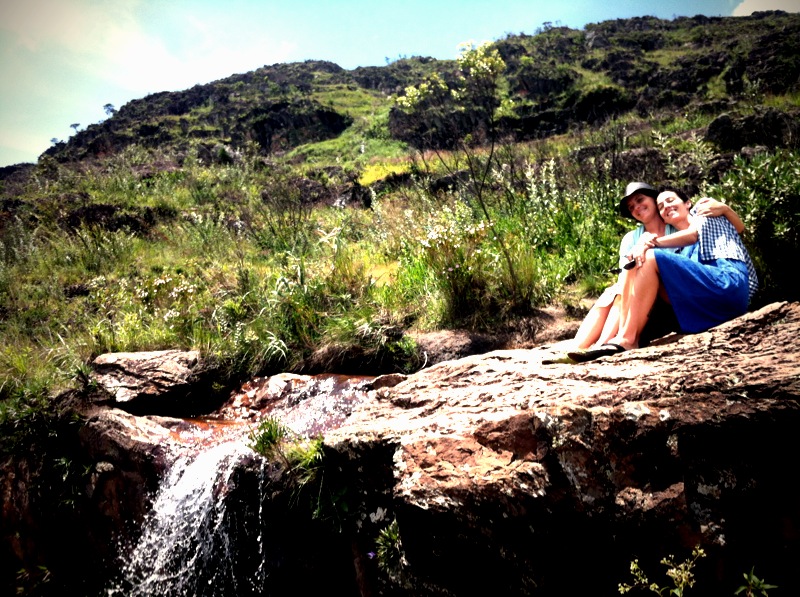
So, we continue our journey. Now we are in the outskirts of Belo Horizonte, Brazil, staying with one of my best friends in the world. Soon we leave for Salvador da Bahia for three weeks in an apartment by the sea. Then, after a few days in the gigantic city of São Paulo, we are off to South Africa. I lived in BH for a summer and then a year in 2001 and 2002-3. One of the things I remember most about living in this city is that it lives up to its namesake – the skyline, the clouds and the sunsets are magnificent nearly every single day. Staying outside the city, we are surrounded by a landscape that is not what people think of when they imagine Brazil, I think. There are rolling green hills, waterfalls, crazy electrical storms and sharp rock formations jutting out of the hillsides. It has been food for the soul to be here with Sage and Luciana as I finish grieving for the end of the academic job search for this year.


Visiting our friends in BA, and then here in BH has definitely inspired us to look with open hearts to the possibilities awaiting us at the end of this trip. One thing we do know now is that I will be returning to India in June to direct and teach the study abroad program for the UW in the Himalayas. Sage is weighing her many options. And then, in August, we hope to land somewhere lovely!

Sunday, March 25, 2012

Buenos Aires Audio Postcard


Also, I've been adding some of our best photos to my flickr page as we go. Search for sagevanwing on Flickr if you care to look at more pictures.